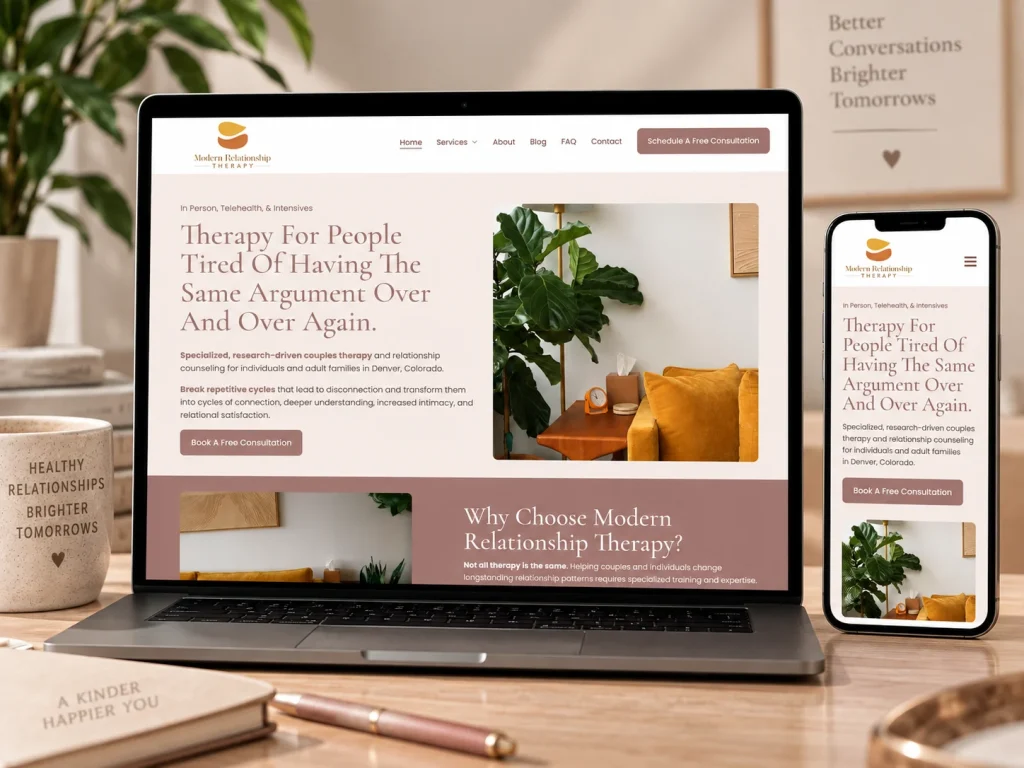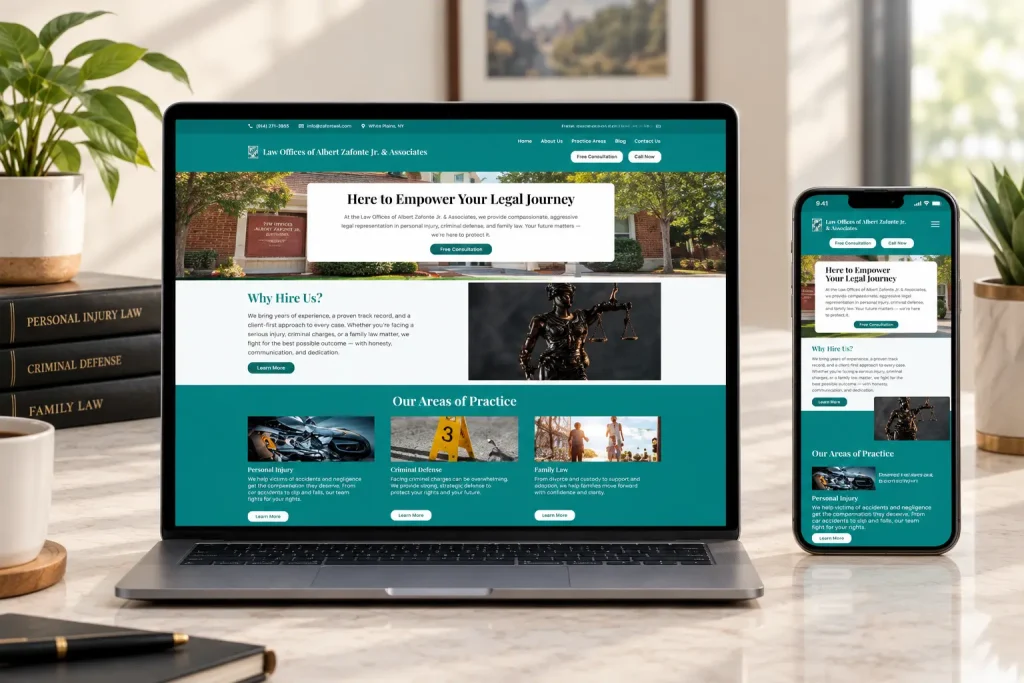







A new patient’s first visit to your practice usually happens weeks before they walk through the door. It happens on your website, often on a phone, often late in the evening.
In that visit, they’re quietly asking one question: “Can I trust this practice with my health?”
Research from the last two years shows what patients look for to answer it. Here are the eight things that matter most, with a quick way to check each one on your own site.See how we help with websites and patient growth for healthcare practices.
First, how much does the website really matter?
More than many practice owners expect. In Tebra’s 2025 survey of nearly 4,000 US adults:
- 44% said a practice’s website affects their choice of provider
- 16% would consider switching providers because of an outdated website
- 65% would switch for better digital features, like online booking and easy communication
Your website isn’t a digital business card. For many patients, it’s the deciding factor between you and the practice down the street.
1. Who the providers are
In a 2024 survey by AHA Media Group, 92% of people said they read a provider’s bio before booking, up from 76% in 2018.
Patients want to know who will be treating them. A name and a list of degrees isn’t enough. They want to know your experience, what you focus on and something about you as a person.
Check your site: Does each provider have their own section or page with a real photo, background, areas of focus and a few human details?
2. Real photos, not stock images
The same survey found 77% of people look for photos or videos when choosing a provider, up from 50% in 2018.
Stock photos of smiling models in white coats don’t build trust. Real photos of your team, your rooms and your front desk do. They help nervous patients picture walking in.
Check your site: Count the stock photos. Replace as many as you can with real ones, especially on the homepage and provider pages.
3. Whether you take their insurance
44% of people in the AHA Media Group survey said they look for insurance information before booking. For many patients, it’s the first filter.
If they can’t find it quickly, many will assume you don’t take their plan, or call to ask, which adds to your phone load.
Check your site: Is there a clear insurance section listing the plans you accept, what you don’t accept and what options exist for patients without insurance?
4. Reviews from other patients
In Tebra’s 2025 survey, 79% of patients read online reviews before choosing a provider, and 53% won’t consider a provider rated below 4 stars.
Most of those reviews live on Google, but your website should show them too. Seeing what other patients say is one of the strongest trust signals you have.
Check your site: Do you show real recent reviews, ideally pulled from Google, on your homepage and service pages?
5. An easy way to book
In Tebra’s 2026 survey, 17% of patients said they’d strongly consider switching providers if they couldn’t book online. And in the 2025 survey, booking online (43%) was just as popular as calling (41%).
Patients who visit your site in the evening can’t call. If there’s no way to book or request an appointment, many will leave and find a practice that lets them.
Check your site: Is there a clear “Book an Appointment” button at the top of every page, on both desktop and mobile? Does it work outside office hours?
6. A site that works on their phone
Most patients will look at your site on a phone. If it’s slow, hard to read or the buttons are too small, they leave.
Speed matters more than most people think. A study by Google and Deloitte found that making a mobile site just 0.1 seconds faster reduced bounce rates on lead-generation sites by 8.3%.
Check your site: Open it on your own phone, on mobile data rather than Wi-Fi. Can you find your phone number, address and booking button within a few seconds? Is anything slow, cut off or hard to tap?
7. Clear information about your services
Patients searching for “Invisalign,” “teeth whitening,” “physical therapy for back pain” or “IV therapy” want to know you offer exactly that, and what to expect.
A single page listing every service in bullet points doesn’t answer their questions. Dedicated service pages do. They also help you show up on Google for those searches.
Check your site: Do your most important services each have their own page explaining what it is, who it’s for, what happens during a visit and how to book?
8. Signs the practice is current and cared for
Small things tell patients a lot. An old copyright year in the footer. A news post from 2019. A broken form. Hours that don’t match Google. Each one quietly suggests the practice may not be paying attention.
Check your site: Scroll to the footer and check the year. Test your contact form. Make sure your hours, address and phone number match your Google Business Profile exactly.
A note on privacy and forms
If your website collects patient details through forms, such as appointment requests or intake forms, that information may be protected health information under HIPAA. Make sure forms are sent securely and handled by tools whose providers will sign a Business Associate Agreement (BAA). Many standard website form plugins aren’t set up for this by default.
Your quick website scorecard
Give your site one point for each “yes”:
- Each provider has a bio and a real photo
- Real photos of the practice and team
- Clear insurance information
- Recent patient reviews on the site
- A clear booking option on every page
- Fast and easy to use on a phone
- A dedicated page for each key service
- Up to date, with details matching Google
7 to 8: Your site is working for you. 4 to 6: You’re likely losing patients you never hear about. 0 to 3: Your website may be costing you more than it’s bringing in.
The bottom line
Patients make up their minds quickly, and your website is often where they do it. The good news is that every item on this list is fixable, and most don’t require a full rebuild.
Never miss a new patient call again Ava answers your missed and after-hours calls and books patients straight into your calendar.
FAQ
Patients most often look for provider bios, real photos, accepted insurance, patient reviews, an easy way to book, clear service information and a site that works well on a phone.
Yes. In Tebra’s 2025 survey, 44% of patients said a practice’s website affects their choice of provider, and 16% would consider switching providers because of an outdated website.
Many do. In Tebra’s 2025 survey, 43% of patients preferred booking online and 41% preferred calling. In 2026, 17% said they would strongly consider switching if they couldn’t book online.
If a form collects protected health information, it should be sent securely and handled by providers that sign a Business Associate Agreement under HIPAA.